- Opening hours: 9am – 5pm (last entry around 4pm).
- Duration: Single-cave tours take 60 minutes, while combo tours visiting multiple caves last 2–3 hours.
- Best time to visit: The best months are September to November when wildflowers bloom and temperatures are mild. Sunset and stargazing tours are ideal for golden light and clear desert skies.
Margaret River Caves: Your guide to its caves & underground formations
What are Margaret River Caves?
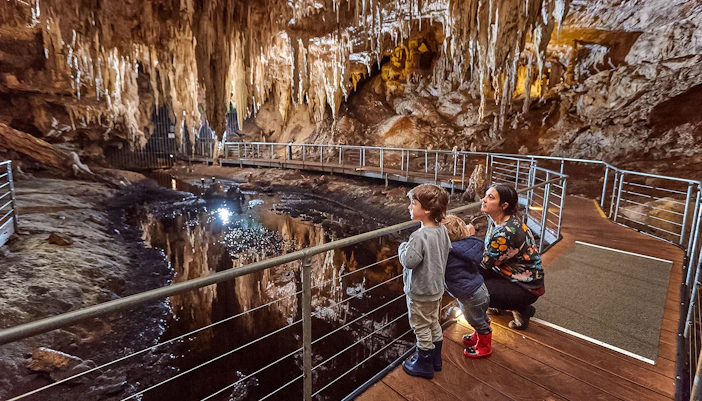
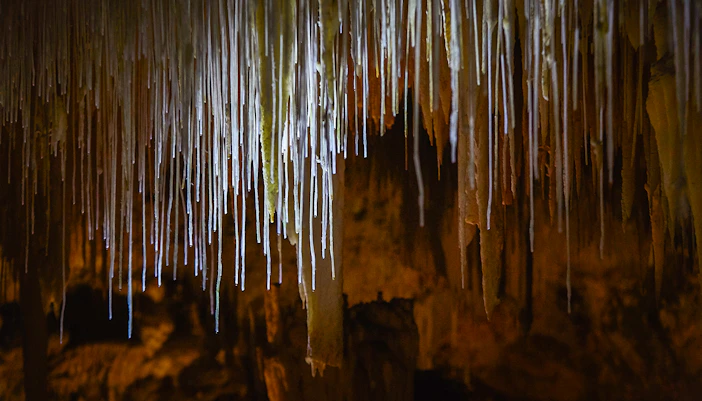
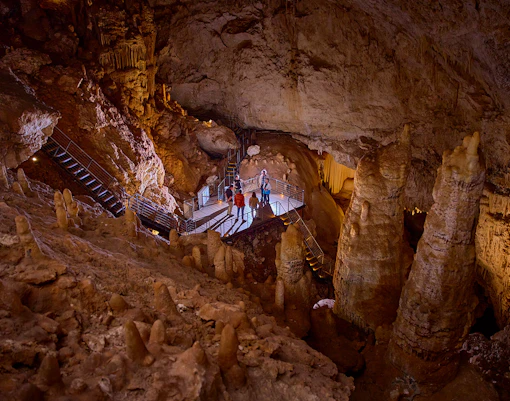
The Margaret River Caves are a series of spectacular limestone caves hidden beneath the forests of the Leeuwin-Naturaliste Ridge. Formed over hundreds of thousands of years, these underground chambers are filled with stalactites, stalagmites, crystal formations, and ancient fossils.
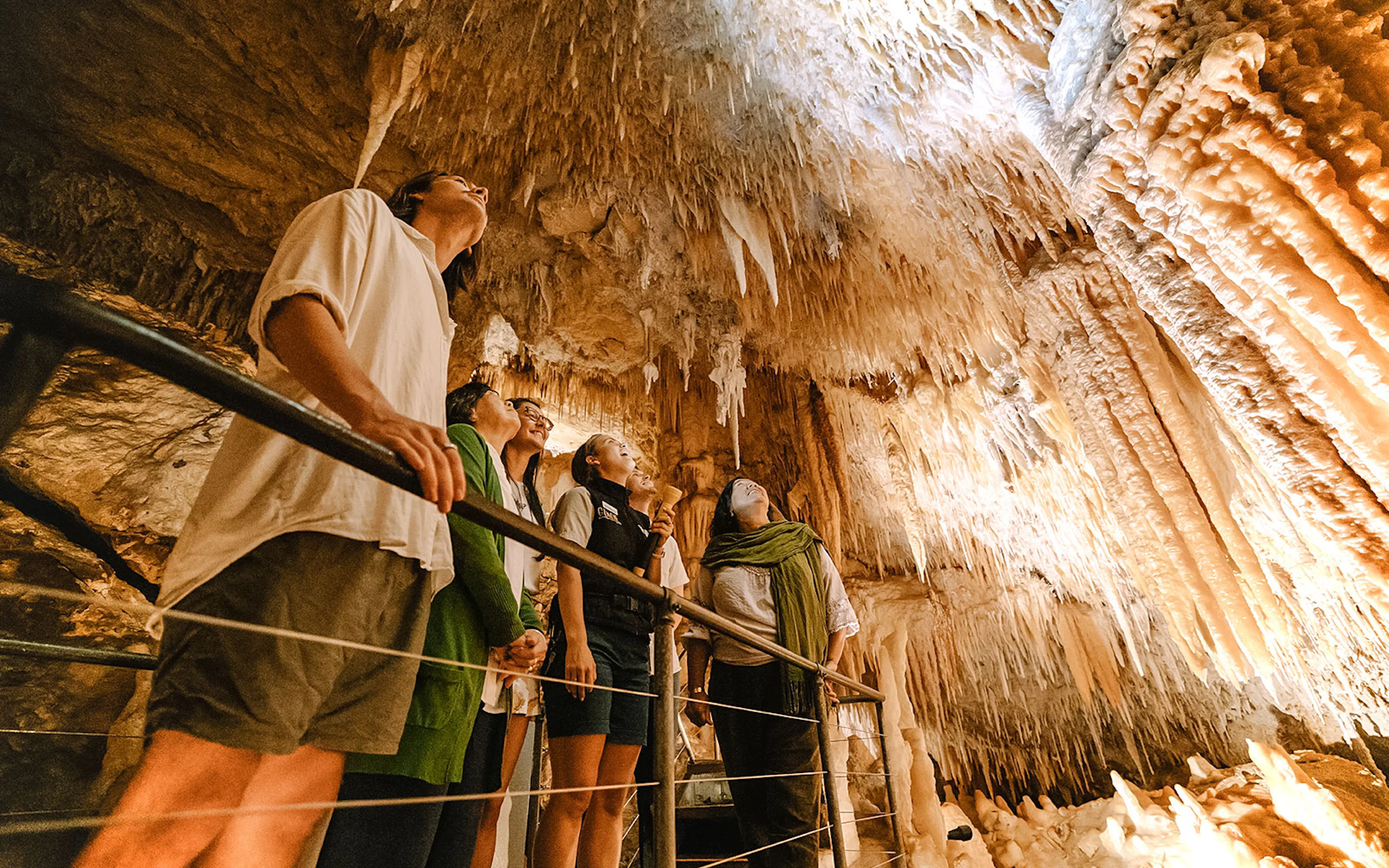
Visitors can explore dramatic show caves like Jewel, Lake, Mammoth, and Ngilgi, each offering unique features such as underground lakes, towering chambers, or preserved megafauna remains. Whether you join a guided tour or wander at your own pace, the caves provide an unforgettable glimpse into the region’s natural history and geological past.
Plan your visit to Margaret River Caves
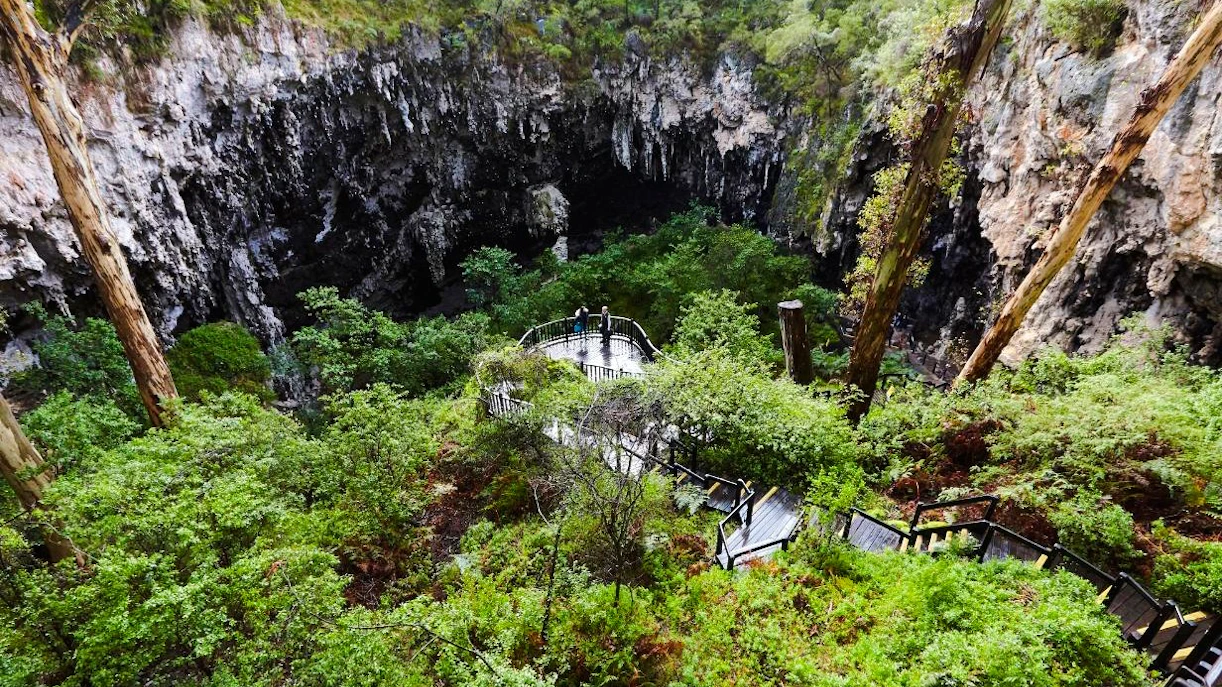
The Margaret River cave network sits along Caves Road between Yallingup and Augusta in Western Australia’s southwest. Home to Ngilgi Cave, Mammoth Cave, Lake Cave, and Jewel Cave, this region features some of the state’s most spectacular limestone show caves and forest scenery. The caves are located 15–50 minutes from Margaret River town, and around 3 hours’ drive from Perth.
Address: Caves Road, Margaret River Region, WA (exact location varies by cave). Find on Map.
- Distance: Margaret River Caves are about 270–300 km south of Perth, around a 3-hour drive via Forrest Highway and Bussell Highway.
- Transfers: Most tours require self-drive. Public transport options are limited. Once you arrive, tours proceed on foot (guided or self-guided) through cave interiors and forest paths.
Top spots to see at & around Margaret River Caves
1/10
Jewel Cave
One of Australia’s biggest show caves, known for its towering chambers and long straw stalactites. A must-see for dramatic limestone formations.
Lake Cave
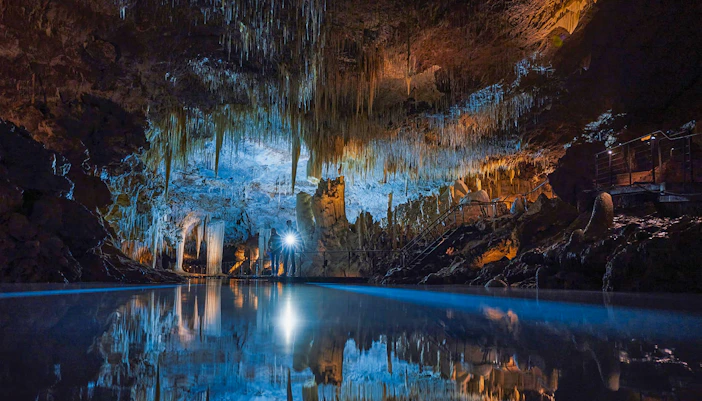
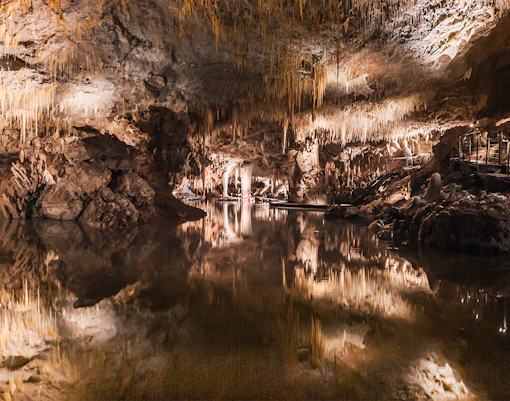
A serene sinkhole cave featuring an underground lake and the unique Suspended Table formation. Its reflections create one of the region’s most magical sights.
Mammoth Cave
A self-guided cave with easy boardwalks and visible megafauna fossils embedded in the rock. Great for families and geology lovers.
Ngilgi Cave
A crystal-filled cave combining self-paced touring with optional adventure crawling sections. Rich in Aboriginal stories and underground formations.
Giants Cave
A rugged, undeveloped cave with ladders and narrow passages for true adventure seekers. Perfect if you want a wilder, hands-on caving experience.
Calgardup Cave
A peaceful, family-friendly cave lit softly to highlight its wide chambers. Ideal for first-time cave explorers and gentle underground walks.
Boranup Karri Forest
A soaring karri forest offering scenic drives and shaded walking trails. Known for its photography-friendly light and towering trees.
Redgate Beach
A rugged coastal spot known for its powerful surf and dramatic rock formations. Popular for photography and peaceful cliff-side strolls.
Cape Leeuwin Lighthouse
Located a short drive south, this historic lighthouse overlooks the meeting point of two oceans. Offers panoramic views and guided tours.
Cape Naturaliste Lighthouse
The northern end of the region features this compact lighthouse with short trails and whale-watching opportunities in season.
How Margaret River is conserving its caves
Margaret River is dedicated to protecting its unique natural and cultural treasures, including the region’s iconic caves. Sustainability is at the heart of every initiative, ensuring these wonders can be enjoyed for generations to come.
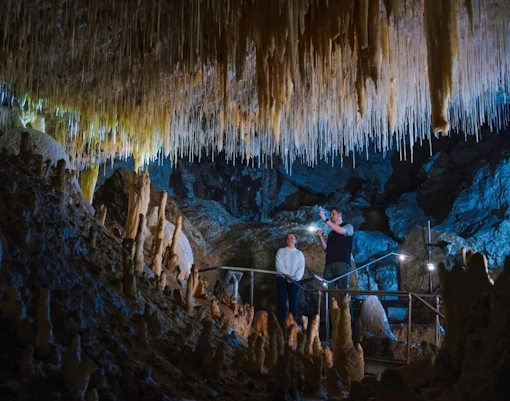
Eco-friendly tourism
All tours are designed to minimize impact. Visitors are guided along marked paths, ensuring that delicate formations and habitats remain untouched.
Energy & resource efficiency
They use low-energy lighting to preserve cave conditions and implement water-saving practices in visitor facilities.
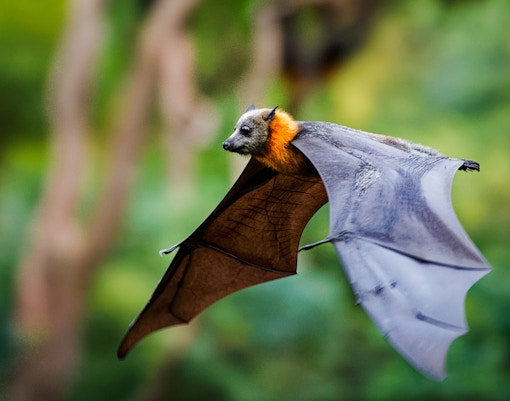
Wildlife protection
The caves are home to rare and sensitive species. The team monitors wildlife activity and ensures that habitats are undisturbed.
Research & education
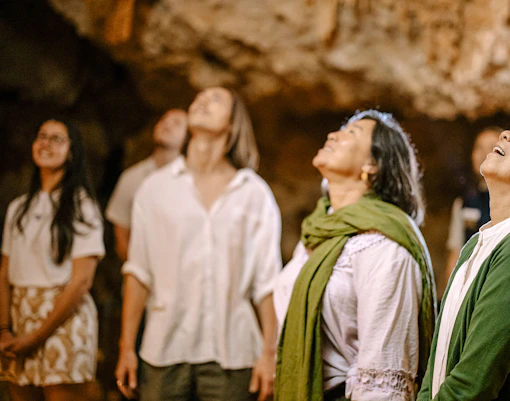
They partner with geologists, ecologists, and local Indigenous communities to study and protect the caves. Visitors can learn about the geology, ecology, and cultural significance through educational programs.
Responsible visitor guidelines
Guests are encouraged to follow simple yet impactful rules. No touching formations, no littering, and respecting wildlife to ensure the caves remain pristine for generations to come.
Tips for visiting Margaret River Caves
- Use the visitor centres for planning: Each cave hub has boards displaying tour times, difficulty levels, and accessibility info to help you choose the right cave.
- Watch for wildlife near carparks: Possums, birds, and kangaroos are common around the forest edges—drive slowly and enjoy the sightings safely.
- Look for tiny details: Many formations are easy to miss—shimmering crystal “popcorn,” flowstone ripples, or micro-stalactites reward those who look closely.
- Ask guides about cave stories: Each cave has unique local legends, discoveries, and quirky history—guides often share stories not found on signs.
- Stop at lookouts you might overlook: Several caves have forest or sinkhole lookouts nearby—short paths lead to fantastic views people often skip.
Frequently asked questions about Margaret River Caves
There are over 100 known caves in the region, with key show caves open to the public including Jewel, Lake, Mammoth, Ngilgi, Giants, and Calgardup.
Jewel Cave is the largest and most visited, known for massive stalactites and towering chambers.
Mammoth Cave is the easiest, offering a self-guided walk with boardwalks and gentle slopes.
Depth varies—Lake Cave sits deep within a collapsed doline, while Mammoth Cave has large walk-through chambers.
Booking is recommended for guided tours at Jewel, Lake, and Ngilgi Caves, especially during weekends, school holidays, and peak seasons.
Most tours take 45–60 minutes, while self-guided caves like Mammoth or Giants can take 30–90 minutes depending on your pace.
Yes. Caves like Mammoth and Ngilgi are family-friendly, with boardwalks and easy paths. Adventure caving sections are optional.
Caves stay cool year-round (around 12–15°C), so bringing a light jacket is recommended.
Yes, each cave has on-site parking, usually free, with additional space for larger vehicles during peak periods.
Most cave sites do not sell food, so bring snacks and water. Some visitor centres have small cafés or vending options.
Walk-ins are accepted when space allows, but pre-booking ensures you don’t miss your preferred time.